State Board Officials Demanding COBSE Membership Face Severe Legal Action: Misuse of Public Office, Contempt of Law & Financial Impropriety
Comprehensive Legal Warning for Government Employees (including Uttarakhand Board & State Education Departments): Why Forcing Private Boards into COBSE Membership is Ultra Vires, Actionable under IPC/BNS, and Grounds for Disciplinary Prosecution
Table of Contents
2. Five Legal Grounds Why Demanding COBSE Membership is Illegal
3. Direct Legal Liabilities & Consequences for Errant Government Employees
3.1 Criminal Liability under Indian Penal Code (IPC) / Bharatiya Nyaya Sanhita (BNS)
3.2 Departmental Disciplinary Action & Service Termination
3.3 Contempt of Court & Writ Petitions in High Courts
4. The Specific Case of Uttarakhand Board & Regional State Officials
5. True Legal Standards: What State Board Officials Must Verify
6. Actionable Legal Strategy for Affected Educational Boards
7. Frequently Asked Questions (Legal & Vigilance FAQs)
1. Executive Summary: The Growing Abuse of Official Power Over COBSE
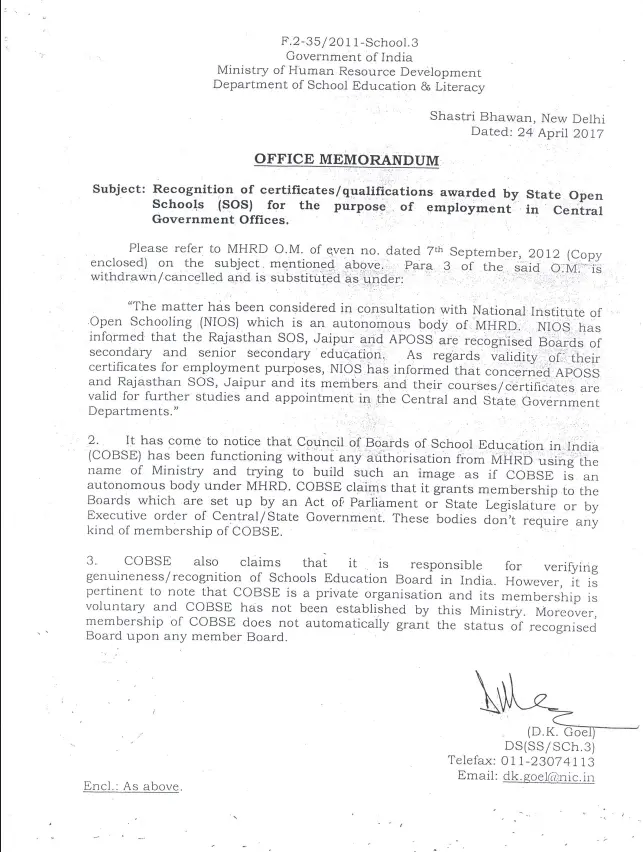
In recent administrative proceedings across certain states—most notably observed in instances involving state education departments such as the Uttarakhand Board of School Education (UBSE) and regional school education officers—several government employees have unlawfully pressured autonomous and private education boards to obtain membership from the Council of Boards of School Education in India (COBSE) as a prerequisite for cross-board equivalence, migration, or examination permissions.
Such coercive demands are completely contrary to Indian constitutional law, administrative jurisprudence, and official Central Government orders. Government employees who issue notices, withhold equivalence, or reject student credentials on the pretext of 'COBSE non-membership' are committing gross abuse of public office and exposing themselves to direct disciplinary, civil, and criminal liabilities.
2. Five Legal Grounds Why Demanding COBSE Membership is Illegal
The table below outlines why no state education officer has the legal authority to enforce COBSE membership:
|
Legal Ground |
Constitutional / Statutory Mandate |
Nature of Illegality Committed by Officials |
|---|---|---|
|
1. Lack of Statutory Jurisdiction |
Entry 25, Concurrent List & State Education Acts |
State officials cannot outsource statutory recognition powers to an unapproved private society registered under the 1860 Act. |
|
2. Central Government 2017 Order |
Ministry of Education Official Clarification (2017) |
The Government of India officially confirmed that COBSE is NOT a government body and membership is purely voluntary. |
|
3. Ultra Vires Doctrine |
Administrative Law & Natural Justice |
Imposing extra-statutory preconditions not present in parent Acts violates the doctrine of Ultra Vires. |
|
4. Article 19(1)(g) & Article 14 |
Fundamental Rights under the Constitution of India |
Coercing institutions to join a private paid association creates arbitrary monopolies and infringes fundamental rights. |
|
5. Financial Impropriety |
Rule 21, General Financial Rules (GFR 2017) |
Compelling payment of private subscription fees constitutes unauthorized commercial favoritism. |
3. Direct Legal Liabilities & Consequences for Errant Government Employees
Government employees and state board administrators who unlawfully insist on COBSE membership are liable under multiple legal frameworks:
3.1 Criminal Liability under Indian Penal Code (IPC) / Bharatiya Nyaya Sanhita (BNS)
Public servants misusing their official position to cause wrongful loss to educational boards or students face criminal prosecution:
3.2 Departmental Disciplinary Action & Service Termination
Under Central Civil Services (Classification, Control and Appeal) Rules and State Civil Services Conduct Rules:
3.3 Contempt of Court & Writ Petitions in High Courts
High Courts have repeatedly quashed arbitrary rejection orders issued by overzealous state board officers. State officers issuing directives contrary to settled judicial precedents face personal contempt proceedings under Article 215 / 226 of the Constitution, including personal cost impositions.
4. The Specific Case of Uttarakhand Board & Regional State Officials
In several instances, Uttarakhand Board (UBSE) officials and regional joint directors have arbitrarily issued letters questioning the equivalence of other recognized boards on the sole ground of 'COBSE non-listing.' A legal audit of this practice reveals:
|
Administrative Action by Official |
Legal Status under Law |
Remedy Available to Aggrieved Institution |
|---|---|---|
|
Rejecting equivalence due to lack of COBSE membership |
Void Ab Initio (Illegal from inception) |
File Writ of Mandamus in High Court against the individual sanctioning officer. |
|
Directing a private/autonomous board to apply to COBSE |
Colorable Exercise of Power & Abuse of Office |
Lodge formal complaint before State Vigilance Department & Lokayukta. |
|
Delaying student migration/marksheet verification |
Infringement of Student Right to Education (Art 21A) |
Civil suit for damages and tortious liability against responsible administrators. |
5. True Legal Standards: What State Board Officials Must Verify
Instead of unlawfully demanding private society memberships, government officers are legally bound to verify educational boards based on authentic statutory parameters:
6. Actionable Legal Strategy for Affected Educational Boards
If any state education department or board official (such as in Uttarakhand or elsewhere) issues a coercive demand for COBSE membership, affected institutions should take the following steps:
7. Frequently Asked Questions (Legal & Vigilance FAQs)
Q1. Can a State Board official (like in Uttarakhand) legally demand COBSE membership from other boards?
No. State board officials have no legal power or statutory authority to mandate COBSE membership. Demanding membership of a private society as a condition for board recognition or equivalence is illegal, arbitrary, and ultra vires.
Q2. What legal action can be taken against government officers forcing boards to join COBSE?
Errant officials can face: (1) Criminal prosecution under Sections 166/167 IPC (BNS 198/199), (2) Departmental disciplinary enquiry under Civil Services Conduct Rules, (3) Lokayukta & Vigilance investigations, and (4) High Court writ petitions with personal cost impositions.
Q3. Is COBSE a government recognizing authority in India?
No. The Ministry of Education officially clarified in 2017 that COBSE is a private voluntary society registered under the 1860 Act, with zero legal authority to grant recognition, equivalence, or affiliation to school boards.
Q4. Can a student's certificate from a statutory/gazetted board be rejected because of no COBSE membership?
No. Any rejection of a candidate's marksheet solely on the grounds of lack of COBSE membership is illegal and unconstitutional. Marks issued by statutory and gazetted boards are valid across all universities and government recruitments.
Q5. What is the duty of government employees when verifying other school boards?
Government employees are legally obligated to verify genuine statutory documents—such as Legislative Acts, Official Gazette Notifications, Article 200 Assent, and online marksheet systems—rather than insisting on private society rosters.
8. Conclusion & Advisory for Public Servants
Public servants and state education board administrators must understand that their authority is strictly circumscribed by the Constitution of India and statutory enactments. Forcing educational institutions to pay subscription fees or take membership in private societies like COBSE is an unlawful and actionable transgression. Government employees must adhere strictly to the rule of law, respect statutory gazette credentials, and refrain from imposing extra-legal conditions that attract direct disciplinary and criminal liabilities.