Why Do Unofficial Associations Like COBSE Flourish in India? A Critical Analysis of Regulatory Voids, Bureaucratic Inertia & Public Deception
An In-Depth Investigation into How Private Registered Societies Exploit Ambiguities, Impersonate Apex Councils, Extract Public Revenue, and Mislead Educational Stakeholders
Table of Contents
2. The 6 Root Causes: How Private Associations Gain Unlawful Power
3. In-Depth Analysis: The Anatomy of Institutional Failure
3.1 The Federal Architecture of Education (Entry 25, Concurrent List)
3.2 The Seduction of 'Private Club' Junkets for Bureaucrats
3.3 The Failure of Digital Verification Ecosystems
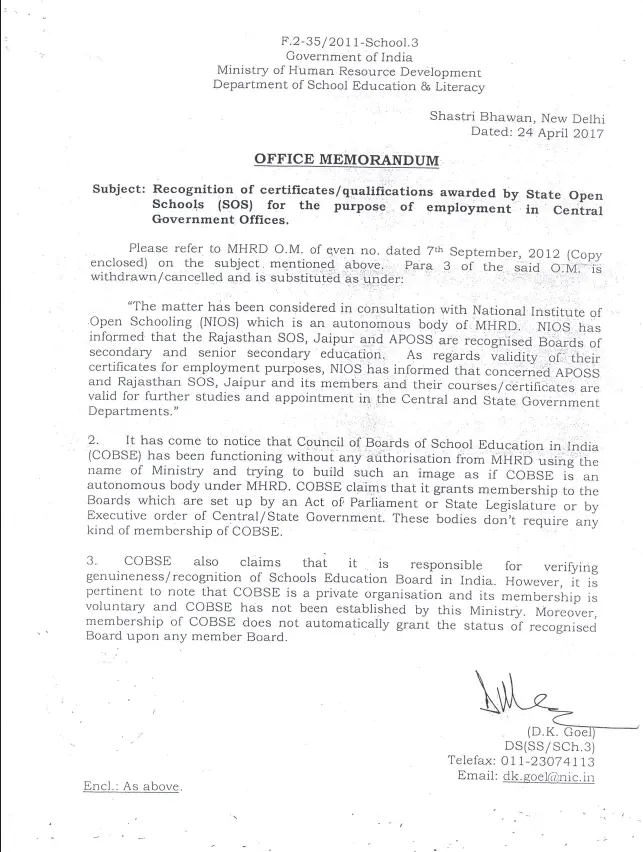
4. The 2017 MHRD Clarification: Shattering the Impersonation
5. The Legal & Disciplinary Danger for Government Officials
6. Policy Roadmap: How to Permanently Eliminate Pseudo-Regulators
7. Frequently Asked Questions (Policy & Governance FAQs)
1. Introduction: A Critical Question for Indian Educational Governance
One of the most troubling phenomena in Indian public administration is the rise of private voluntary societies that succeed in masquerading as apex government regulatory bodies for decades. The most prominent manifestation of this issue is the Council of Boards of School Education in India (COBSE), a private society registered under the Societies Registration Act, 1860. Despite having zero constitutional standing or statutory mandate from Parliament, COBSE has managed to wield extraordinary de facto influence over state education departments, students, and schools.
How does an unauthorized private club flourish for nearly half a century in a democratic republic governed by the rule of law? Why do sovereign state boards pay public money to private societies? And how do thousands of digital websites normalize this deception? This paper dissects the institutional failures, structural loopholes, and psychological factors that enable unofficial associations like COBSE to thrive in India.
2. The 6 Root Causes: How Private Associations Gain Unlawful Power
The institutional analysis below details the six interlocking factors that have allowed unofficial societies like COBSE to entrench themselves in India:
|
Factor / Root Cause |
Mechanism of Exploitation |
Institutional Damage & Public Impact |
|---|---|---|
|
1. Absence of a Central School Regulator |
Higher education has UGC, technical education has AICTE, but school education lacks an overarching central statutory licensing council. |
Private societies step in to fill the perceived vacuum, falsely projecting themselves as the apex licensing authority. |
|
2. Deceptive Nomenclature ('Council') |
Exploiting sovereign-sounding words like 'Council' (COBSE) to imitate statutory bodies (UGC, MCI/NMC, AICTE). |
General public, recruiters, and even government employees mistake a private club for an official ministry wing. |
|
3. Bureaucratic Laziness & Lack of Legal Scrutiny |
State board officials blindly forward invitations, attend subsidized conventions, and pay institutional fees without reading governing acts. |
Government imprimatur is lent to a private entity, legitimizing it in the eyes of lower-level bureaucracy. |
|
4. Commercial Admission & Verification Mafia |
Private consultancies, agents, and admission brokers use 'COBSE Listing' as an extortion and marketing tool. |
Students from non-member statutory boards are harassed, while unapproved commercial boards pay fees to buy credibility. |
|
5. Search Engine Keyword Monopolization |
Thousands of digital blogs, content farms, and unverified websites duplicate the 'COBSE list' as 'Recognized Board List'. |
Search engine algorithms falsely reinforce the narrative that non-COBSE boards are invalid. |
|
6. Inadequate Enforcement of Financial Rules (GFR) |
State Finance Departments failing to conduct strict audits on public funds diverted to private society subscriptions. |
Public taxpayer money is continuously channeled to sustain a private association without legislative appropriation. |
3. In-Depth Analysis: The Anatomy of Institutional Failure
3.1 The Federal Architecture of Education (Entry 25, Concurrent List)
Under the Seventh Schedule of the Constitution of India, school education is on the Concurrent List. Each State creates its own Board through a State Legislative Act (e.g., UPMSP, MSBSHSE, BSEB), while the Central Government administers CBSE and NIOS. Because there is no single central statute regulating all secondary boards, an unconstitutional intermediary like COBSE was able to position itself as a self-appointed coordinator without statutory oversight.
3.2 The Seduction of 'Private Club' Junkets for Bureaucrats
A major sociological reason private associations thrive is their ability to organize annual general meetings, overseas conferences, and luxury retreats for participating government officials. Public servants from state education boards are lured with committee positions, conference junkets, and honorary titles, creating a mutual dependency that prevents administrative scrutiny.
3.3 The Failure of Digital Verification Ecosystems
Before the advent of modern transparent online marksheet portals, cross-board verification was slow, postal, and cumbersome. Private associations exploited this inefficiency by offering a rudimentary paper list of member boards, which lazy recruitment clerks began using as a shortcut for Document Verification (DV), bypassing statutory gazettes.
4. The 2017 MHRD Clarification: Shattering the Impersonation
The unchecked proliferation of COBSE's claims was officially halted in 2017 when the Ministry of Human Resource Development (now Ministry of Education, Government of India) issued clear regulatory orders and public clarifications:
|
Government Determination |
Official Finding / Order |
Legal Impact |
|---|---|---|
|
Statutory Reality |
COBSE is ONLY a registered society under the Societies Registration Act, 1860. |
Holds zero regulatory or government licensing power. |
|
No Delegated Authority |
Government of India never authorized COBSE to approve, affiliate, or evaluate boards. |
COBSE list has no legal force in courts or public employment. |
|
Voluntary Nature |
Membership is 100% voluntary; no board is required by law to join or pay fees. |
Non-member statutory boards enjoy full constitutional recognition. |
5. The Legal & Disciplinary Danger for Government Officials
Public servants who continue to promote private associations like COBSE or harass non-member boards face severe legal liabilities:
6. Policy Roadmap: How to Permanently Eliminate Pseudo-Regulators
To clean up the educational ecosystem and prevent private societies from misleading the nation, the following systemic reforms are necessary:
7. Frequently Asked Questions (Policy & Governance FAQs)
Q1. Why do private associations like COBSE flourish in India for so long?
They flourish due to a combination of: (1) lack of an overarching central school regulator, (2) deceptive nomenclature using the word 'Council', (3) bureaucratic negligence, (4) commercial tout networks, and (5) search engine manipulation.
Q2. Is COBSE a government recognizing authority in India?
No. COBSE is only a private voluntary society registered under the Societies Registration Act, 1860. The Ministry of Education officially clarified in 2017 that COBSE has no power to recognize, affiliate, or regulate school boards.
Q3. How do private associations extract money from government education boards?
They invite state board officials to annual meetings, offer honorary committee titles, and charge large annual membership fees, which are unlawfully paid from taxpayer funds in violation of General Financial Rules (GFR).
Q4. What is the legal status of an education board that is not a member of COBSE?
A non-member board has 100% full legal recognition if it is established by an Act of Parliament, an Act of a State Legislature, or registered with an Official Government Gazette Notification.
Q5. What legal action can be taken against officials who enforce COBSE membership?
Officials face criminal prosecution under Sections 166/167 IPC (BNS 198/199), departmental disciplinary enquiries, Lokayukta investigations, and personal financial recovery for unauthorized expenditure.
8. Conclusion: Time for Structural Accountability
The fact that a private voluntary association like COBSE could operate as an unofficial gatekeeper for over four decades is a severe indictment of bureaucratic apathy and regulatory ambiguity. India's education ecosystem belongs to its students, governed by the Constitution and statutory legislation. It is time for governments, courts, and educational stakeholders to put an end to private society gatekeeping and restore absolute constitutional transparency.